

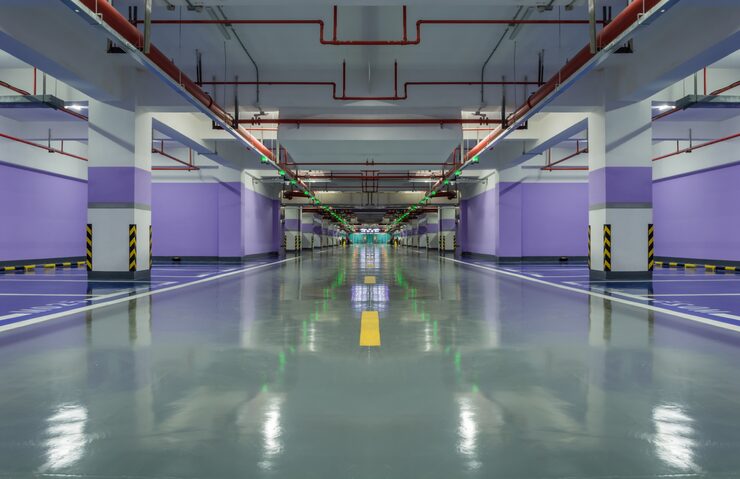
Factory flooring is not just a structural component; instead, it directly influences productivity, safety, and maintenance costs. In modern industrial environments, epoxy flooring systems for factories have become the preferred solution due to their durability and performance.
Moreover, factory floors are constantly exposed to heavy machinery, chemical spills, and continuous traffic. Therefore, selecting the right flooring system is critical for long-term efficiency.
What Are Epoxy Flooring Systems?
Epoxy flooring systems for factories are formed by combining epoxy resin with a hardener and applying it over a prepared concrete surface. As a result, the mixture cures into a seamless and highly durable layer.
In addition, epoxy bonds directly with the concrete substrate. Consequently, it becomes an integral part of the floor rather than a surface coating. This significantly improves strength and longevity.
Why Epoxy Flooring Is the Preferred Choice for Factories
Factories operate under extreme conditions. For instance, forklift movement, dropped tools, and chemical exposure can damage traditional flooring.
However, epoxy flooring systems for factories effectively address these challenges. For example, they offer:
- High resistance to abrasion and impact
- Seamless and dust-free surfaces
- Easy cleaning and maintenance
- Reduced long-term repair costs
As a result, many industries are shifting towards epoxy-based industrial flooring solutions.
Types of Epoxy Flooring Systems for Factories
Different industries require different flooring specifications. Therefore, choosing the right type of epoxy flooring systems for factories is essential.
Self-Leveling Epoxy Flooring
Firstly, self-leveling systems create smooth and uniform surfaces. Thus, they are ideal for production areas and cleanrooms.
Epoxy Mortar Flooring
Secondly, epoxy mortar systems provide exceptional strength. In particular, they are suitable for heavy-load zones such as loading bays and machine foundations.
Anti-Skid Epoxy Flooring
Additionally, anti-slip epoxy systems improve safety in wet or oily conditions. Therefore, they are widely used in high-risk areas.
Decorative Epoxy Flooring
Finally, decorative epoxy flooring enhances visual appeal. At the same time, it maintains industrial-grade durability.
Chemical Resistance and Spill Protection
Many industries handle aggressive chemicals daily. As a result, traditional flooring often deteriorates quickly.
In contrast, epoxy flooring systems for factories offer excellent resistance to chemicals, oils, and solvents. Furthermore, spills can be cleaned easily without damaging the surface.
Therefore, these systems are highly suitable for pharmaceutical, food processing, and chemical manufacturing industries.
Load Bearing Capacity and Impact Resistance
Industrial flooring must support both static and dynamic loads. For example, machinery and vehicles create constant pressure on the surface.
In this context, epoxy flooring systems for factories distribute loads evenly and protect the underlying concrete. Moreover, they resist impact from tools and equipment.
Consequently, this reduces damage and extends the life of the floor.
Hygiene, Cleanliness and Compliance
Hygiene is essential in many industrial sectors. Therefore, flooring must prevent contamination.
Since epoxy flooring systems for factories are seamless and non-porous, they eliminate joints where dirt and bacteria can accumulate. In addition, they are resistant to stains and moisture.
As a result, they are widely used in food processing, pharmaceutical, and electronics industries.
Safety and Workplace Efficiency
Worker safety is a top priority in factories. Therefore, flooring must minimize risks.
Epoxy flooring systems for factories can be customized with anti-slip textures. Moreover, color-coded markings can define walkways, hazard zones, and work areas.
Thus, they improve safety awareness and operational efficiency simultaneously.
Installation Strategy and Downtime Management
Proper installation is crucial for performance. Therefore, surface preparation and application must be handled carefully.
Experienced contractors plan the installation of epoxy flooring systems for factories to minimize disruption. Additionally, fast-curing systems help reduce downtime.
As a result, factories can maintain productivity during upgrades.
Maintenance and Lifecycle Value
One of the key advantages of epoxy flooring systems for factories is their low maintenance requirement.
For instance, regular cleaning is usually sufficient to maintain the surface. Furthermore, periodic inspections help identify minor issues early.
Therefore, epoxy flooring provides long-term cost savings and reliable performance.
Role of EPC Contractors in Industrial Flooring
EPC contractors play a critical role in project execution. Specifically, they manage coordination between civil work and flooring application.
Moreover, they ensure proper thickness, adhesion, and curing standards. As a result, epoxy flooring systems for factories perform consistently over time.
Final Thoughts
In conclusion, flooring is not just a finishing element; instead, it is a strategic investment.
Epoxy flooring systems for factories offer durability, safety, and cost efficiency. Therefore, they are an ideal choice for modern industrial environments.
Ultimately, investing in the right flooring solution helps factories improve performance, reduce maintenance costs, and maintain compliance with industry standards.
Frequently Asked Questions (FAQs)
1. What is industrial epoxy flooring?
Industrial epoxy flooring is a high-performance surface coating created using resin and hardener applied over concrete. As a result, it forms a seamless, durable, and chemical-resistant floor suitable for manufacturing and warehouse environments.
2. Why is epoxy floor coating used in factories?
Epoxy floor coating is widely used in factories because it provides excellent durability, resistance to chemicals, and easy maintenance. In addition, it improves workplace safety and supports heavy machinery operations.
3. How long does epoxy flooring last in industrial areas?
The lifespan of epoxy flooring in industrial areas typically ranges from 5 to 10 years. However, with proper maintenance and controlled usage, it can last even longer.
4. Is epoxy flooring resistant to chemicals and spills?
Yes, epoxy flooring offers strong resistance to chemicals, oils, and solvents. Therefore, it is commonly used in industries such as pharmaceuticals, food processing, and chemical manufacturing.
5. Can epoxy flooring handle heavy machinery and traffic?
Epoxy flooring is designed for heavy-duty use. It can easily withstand forklift movement, heavy equipment loads, and constant foot traffic without cracking or damage.