
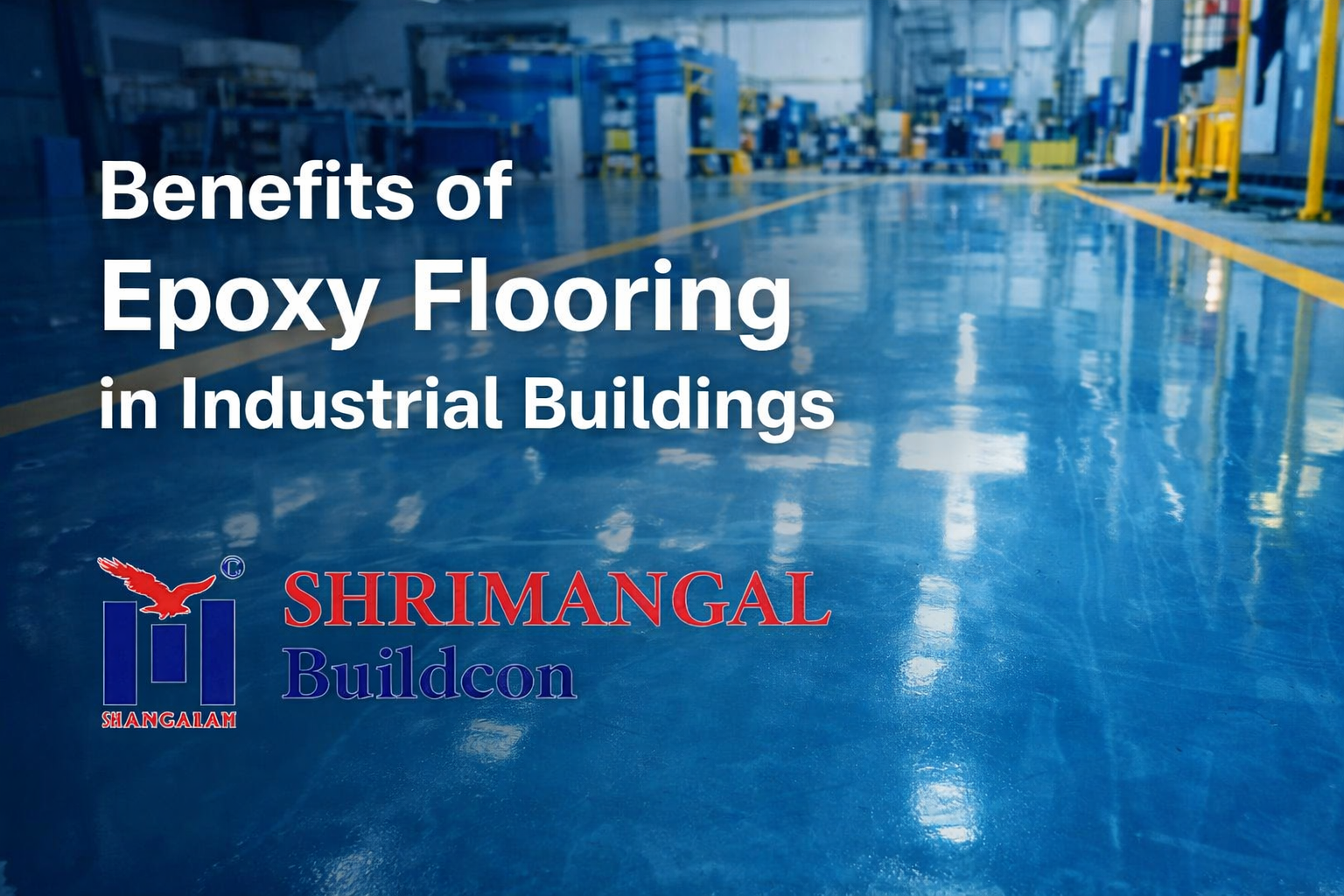
Industrial buildings require flooring that is durable, safe, and resistant to heavy usage. Traditional concrete floors often crack, absorb chemicals, and wear out under constant pressure from machinery and heavy vehicles. This is why many industries today prefer industrial epoxy flooring as a reliable and long-lasting solution.
Epoxy flooring systems are widely used in factories, warehouses, pharmaceutical plants, and manufacturing units because they provide a strong, seamless, and chemical-resistant surface. In this article, we will explore the key benefits of epoxy flooring in industrial buildings, compare it with traditional flooring, and understand why businesses are increasingly choosing this flooring solution.
What is Industrial Epoxy Flooring?
Industrial epoxy flooring is a high-performance flooring system created by applying epoxy resin and hardener over a concrete surface. The chemical reaction forms a rigid plastic material that bonds strongly to the concrete, creating a smooth and highly durable floor.
This type of flooring is commonly used in:
- factories
- warehouses
- pharmaceutical facilities
- food processing plants
- automotive manufacturing units
Because of its strength and chemical resistance, industrial epoxy flooring has become one of the most trusted flooring solutions for heavy industrial environments.
Industrial Epoxy Flooring vs Traditional Concrete Flooring
| Feature | Industrial Epoxy Flooring | Traditional Concrete Flooring |
|---|---|---|
| Durability | Extremely durable and impact resistant | Can crack under heavy pressure |
| Chemical Resistance | Highly resistant to oils, acids, and chemicals | Absorbs chemicals easily |
| Maintenance | Easy to clean and maintain | Requires frequent repairs |
| Safety | Anti-slip coatings available | Can become slippery |
| Lifespan | 10–20 years | 5–8 years with repairs |
| Appearance | Smooth, glossy, professional finish | Rough and dull surface |
This comparison clearly shows why many industries prefer epoxy flooring systems for factories and warehouses.
1. Exceptional Durability for Heavy Industrial Use
One of the biggest advantages of industrial epoxy flooring is its outstanding durability. Industrial environments involve heavy machinery, forklifts, pallet jacks, and constant foot traffic.
Epoxy flooring creates a thick protective layer over concrete, making it extremely resistant to impact and wear. This makes factory epoxy flooring ideal for manufacturing plants, production units, and logistics facilities.
A well-installed epoxy floor can last 10–20 years with minimal maintenance, making it a cost-effective investment for industrial buildings.
2. Chemical and Spill Resistance
Many industrial facilities deal with chemicals, oils, solvents, and other corrosive substances. Traditional concrete floors absorb these liquids, which leads to damage and safety hazards.
Chemical resistant flooring made with epoxy protects the floor from chemical spills and contamination. This is especially important for:
- pharmaceutical factories
- chemical plants
- food processing units
- automotive manufacturing facilities
Industrial epoxy flooring prevents chemical penetration and keeps the workplace safe and compliant with industry standards.
3. Seamless and Easy to Clean Surface
Epoxy flooring systems create a smooth and seamless surface without joints or cracks. This prevents dirt, dust, bacteria, and debris from accumulating on the floor.
Industries that require strict hygiene standards, such as food processing plants and pharmaceutical factories, benefit greatly from epoxy flooring.
The smooth surface makes cleaning warehouse epoxy flooring and factory floors faster and easier.
4. Improved Workplace Safety
Safety is a critical concern in industrial environments. Damaged or slippery floors can cause serious accidents.
Industrial epoxy flooring can be customized with anti-slip coatings, making it safer for workers and machinery.
Many factories also use epoxy flooring systems to mark:
- safety walkways
- hazard zones
- forklift paths
- storage areas
This improves both workplace safety and operational efficiency.
5. High Load-Bearing Capacity
Industrial buildings require flooring capable of supporting heavy loads from machinery, storage racks, and vehicles.
Epoxy flooring strengthens the concrete base and provides excellent load-bearing capacity. This makes it perfect for warehouse flooring, manufacturing plants, and logistics hubs.
Warehouse epoxy flooring can handle continuous forklift movement without cracking or breaking.
6. Cost-Effective Long-Term Solution
Although epoxy flooring installation may require an initial investment, it significantly reduces long-term maintenance costs.
Epoxy floors are resistant to:
- abrasion
- chemicals
- moisture
- impact
Because of this durability, businesses save money on frequent floor repairs.
Industrial epoxy flooring is therefore one of the most economical flooring solutions for factories and warehouses.
7. Attractive and Professional Appearance
Epoxy flooring systems provide a clean, glossy, and modern appearance for industrial buildings.
They are available in different colors and finishes and can improve the look of:
- production units
- warehouses
- commercial buildings
- industrial showrooms
A reflective epoxy floor also improves lighting efficiency inside large facilities.
8. Moisture and Dust Protection
Concrete floors naturally release dust particles over time, which can affect machinery and indoor air quality.
Industrial epoxy flooring seals the concrete surface, preventing dust formation and protecting the structure from moisture damage.
This feature is particularly beneficial for industrial warehouse flooring and manufacturing facilities where dust control is important.
Average Cost of Epoxy Flooring for Industrial Buildings
The cost of epoxy flooring depends on factors such as surface preparation, thickness, and project size.
| Flooring Type | Average Cost in India |
|---|---|
| Basic Epoxy Flooring | ₹60 – ₹90 per sq ft |
| Industrial Heavy-Duty Epoxy | ₹90 – ₹150 per sq ft |
| Chemical Resistant Epoxy | ₹120 – ₹200 per sq ft |
Large industrial projects may have lower per-square-foot costs depending on the scale.
Why Industries Prefer Epoxy Flooring Today
With the rapid growth of manufacturing, logistics, and warehousing industries, businesses require flooring that supports productivity and safety.
Industrial epoxy flooring provides:
- high durability
- chemical resistance
- easy maintenance
- long lifespan
- professional appearance
Because of these advantages, many companies hire a professional epoxy flooring contractor to install durable flooring systems in industrial buildings.
Frequently Asked Questions (FAQ)
How long does industrial epoxy flooring last?
Industrial epoxy flooring typically lasts 10–20 years, depending on usage and maintenance.
Is epoxy flooring good for factories?
Yes. Factory epoxy flooring is highly durable, chemical resistant, and capable of supporting heavy machinery.
Is epoxy flooring suitable for warehouses?
Yes. Warehouse epoxy flooring can handle forklift traffic, heavy storage racks, and continuous operations.
Does epoxy flooring require maintenance?
Epoxy floors require minimal maintenance and are easy to clean compared to traditional concrete floors.
Conclusion
Epoxy flooring offers numerous advantages for industrial buildings, including durability, chemical resistance, safety, and cost efficiency. Whether it is a factory, warehouse, pharmaceutical plant, or manufacturing unit, epoxy flooring systems provide a strong and reliable flooring solution.
As industries continue to expand and modernize their infrastructure, industrial epoxy flooring remains one of the best flooring options for factories and warehouses.
If you are planning to upgrade your industrial flooring, working with an experienced epoxy flooring contractor can help ensure the best results for your facility.