

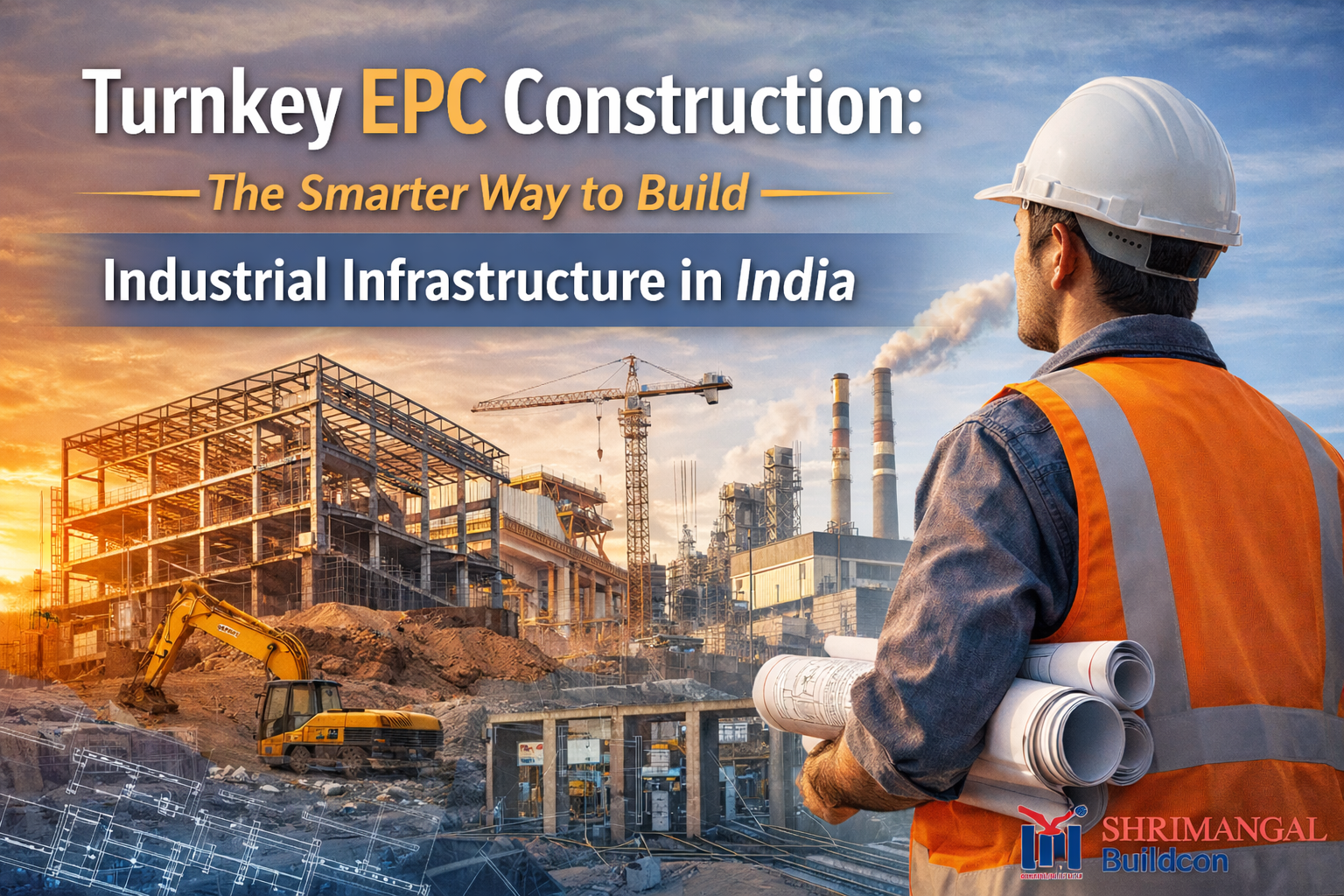
India is witnessing a rapid transformation in industrial infrastructure. Manufacturing units, logistics hubs, warehouses, pharmaceutical plants, and engineering facilities are expanding at an unprecedented pace. With tighter deadlines, stricter compliance requirements, and rising construction costs, industrial developers are rethinking how projects are planned and executed. This shift has made turnkey EPC construction one of the most reliable and future-ready models for industrial development in India.
Unlike traditional construction methods that rely on multiple vendors for design, procurement, and execution, the EPC model brings everything under one accountable partner. Engineering, material procurement, and construction are handled as a single integrated process, reducing delays, miscommunication, and cost overruns. For industries where time-to-operation directly impacts revenue, this unified approach has become a strategic advantage rather than just a construction choice.
Why the EPC Model Works Better for Industrial Projects
Industrial construction is fundamentally different from residential or commercial projects. It requires precision engineering, heavy structural planning, electrical and mechanical integration, and strict adherence to safety and regulatory standards. When multiple agencies work independently, even minor coordination gaps can lead to expensive rework and timeline disruptions. Turnkey EPC construction eliminates this fragmentation by aligning design decisions with real-world execution from the very beginning.
Because engineering teams work closely with on-site execution teams, layouts are optimized for functionality, scalability, and maintenance. Structural systems, pre-engineered buildings, electrical infrastructure, and utility planning are designed with operational efficiency in mind, not just aesthetics or theoretical calculations. This approach ensures that industrial facilities perform efficiently long after construction is completed.
Faster Project Delivery Without Compromising Quality
Speed has become a defining factor in modern industrial construction. Whether it is a factory expansion, a new warehouse, or an industrial shed, delays often result in lost business opportunities. EPC contractors streamline project timelines by running parallel workflows, where design finalization, procurement planning, and site preparation move together instead of sequentially.
Material procurement is planned strategically to avoid shortages, price volatility, and on-site storage issues. Structural steel, cement, electrical components, and specialized industrial materials are sourced as per the construction schedule, ensuring uninterrupted progress. This level of coordination allows EPC projects to achieve faster completion while maintaining consistent build quality and safety standards.
Cost Control and Predictable Project Outcomes
One of the biggest concerns in industrial construction is budget uncertainty. Traditional multi-vendor projects often suffer from scope creep, unclear responsibilities, and frequent cost escalations. Turnkey EPC projects operate on clearly defined scopes and timelines, giving clients greater financial visibility from the start.
Because a single contractor is responsible for the entire lifecycle of the project, risks related to delays, coordination failures, and material mismatches are significantly reduced. This results in better cost control, fewer disputes, and a smoother handover process. Over the long term, EPC-built facilities often deliver better value due to reduced maintenance issues and optimized operational layouts.
Compliance, Safety, and Long-Term Reliability
Industrial projects in India must comply with multiple regulatory frameworks, including environmental norms, fire safety regulations, electrical standards, and local authority approvals. Managing these requirements independently can be complex and time-consuming for industrial clients. EPC contractors integrate compliance management into the construction process, ensuring that approvals, inspections, and documentation are handled systematically.
Safety is another critical area where turnkey EPC construction adds value. Industrial sites involve heavy machinery, high-load structures, and complex electrical systems. Experienced EPC teams follow structured safety protocols and quality control measures throughout the project lifecycle, reducing risks during construction and future operations.
The Future of Industrial Construction in India
As India continues to strengthen its manufacturing and infrastructure ecosystem, the demand for efficient, scalable, and compliant industrial facilities will only grow. Businesses are no longer looking for just construction services; they want reliable partners who can deliver operational-ready facilities with minimal risk.
Turnkey EPC construction aligns perfectly with this evolving demand. By combining engineering expertise, procurement efficiency, and execution capability under one roof, the EPC model offers a smarter and more sustainable approach to industrial development. For companies planning long-term growth, choosing an experienced EPC contractor is not just about building faster it is about building right.