

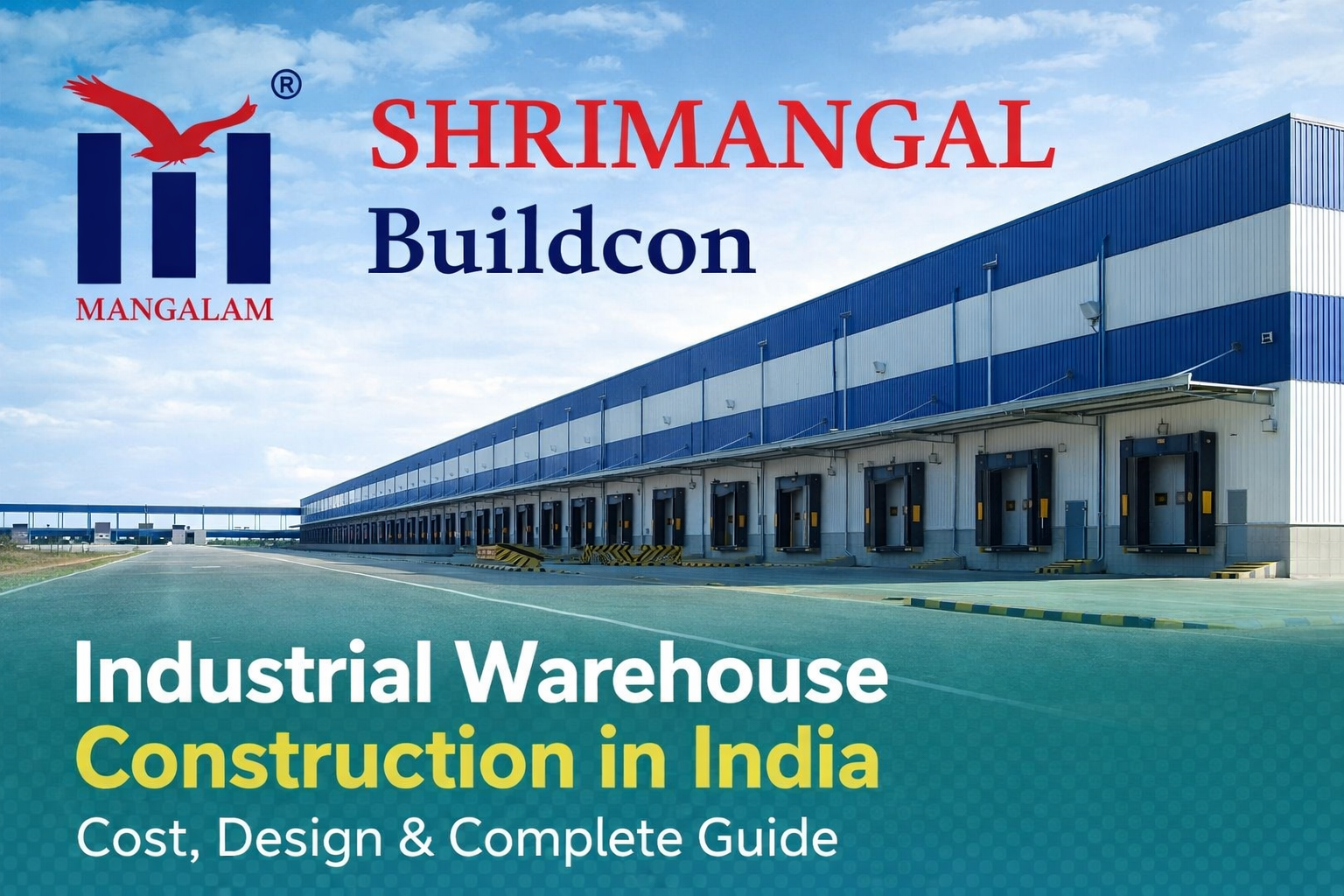
India’s logistics, manufacturing, and e-commerce sectors are expanding rapidly. As businesses scale operations and supply chains become more complex, the demand for modern warehouse infrastructure is increasing across the country. From large distribution centers to industrial storage facilities, warehouses are now critical components of business operations.
Industrial warehouse construction requires careful planning, structural engineering expertise, and compliance with safety and regulatory standards. Businesses must consider factors such as warehouse layout, structural systems, loading capacity, automation compatibility, and long-term operational efficiency.
This guide explains the process of industrial warehouse construction in India, design considerations, cost factors, and best practices that companies should understand before building a warehouse facility.
What Is Industrial Warehouse Construction?
Industrial warehouse construction refers to the development of facilities used for storing goods, raw materials, finished products, and equipment. These warehouses are typically built for industries such as manufacturing, logistics, e-commerce, retail distribution, and cold storage operations.
Modern warehouses are no longer simple storage spaces. They are designed to support advanced logistics operations including inventory management systems, automated material handling, and optimized product movement.
Typical warehouse facilities may include:
- Storage zones
- Loading and unloading docks
- Inventory management areas
- Office spaces
- Packaging and dispatch zones
- Truck parking areas
The design and construction of warehouses must prioritize structural durability, operational efficiency, and scalability.
Types of Industrial Warehouses
Different industries require different types of warehouses depending on operational needs.
Distribution Warehouses
Distribution warehouses act as hubs for receiving, sorting, and dispatching goods. These facilities are commonly used by logistics companies and e-commerce businesses.
Manufacturing Warehouses
Manufacturing warehouses store raw materials, machinery, and finished goods within or near production facilities.
Cold Storage Warehouses
Cold storage warehouses are temperature-controlled facilities used for pharmaceuticals, food products, and perishable goods.
Fulfillment Centers
Fulfillment centers handle order processing, packaging, and shipping for online businesses.
Bulk Storage Warehouses
These facilities store large quantities of goods such as agricultural products, chemicals, or industrial materials.
Key Steps in Industrial Warehouse Construction
Building an industrial warehouse involves several stages that ensure structural integrity and operational efficiency.
1. Site Selection and Land Preparation
The location of a warehouse is one of the most important factors for logistics efficiency. Businesses typically choose sites close to highways, ports, railway terminals, or industrial corridors.
Land preparation includes:
- Soil testing
- Land grading
- Drainage planning
- Site leveling
Proper site preparation ensures a stable foundation for construction.
2. Warehouse Design and Planning
Warehouse design determines how efficiently goods can move through the facility. Engineers and architects plan the layout based on operational workflows.
Important design considerations include:
- Storage capacity
- Ceiling height
- Floor load capacity
- Dock door placement
- Vehicle movement paths
- Ventilation and lighting systems
A well-designed warehouse reduces operational delays and improves productivity.
3. Structural System Selection
Two common structural systems are used for industrial warehouses in India.
Pre-Engineered Buildings (PEB)
PEB structures are widely used for warehouse construction because they are lightweight, durable, and quick to build.
Advantages include:
- Faster construction time
- Lower material waste
- Cost efficiency
- Easy expansion
RCC Structures
Reinforced Cement Concrete (RCC) structures are more traditional and are often used for multi-story warehouses.
Benefits include:
- Higher load-bearing capacity
- Greater durability
- Suitable for heavy industrial operations
4. Foundation and Flooring
Warehouse floors must withstand heavy loads from forklifts, storage racks, and machinery. Industrial flooring systems typically include:
- Reinforced concrete flooring
- Epoxy flooring for chemical resistance
- Polished concrete flooring for durability
High-quality flooring ensures long-term operational performance and safety.
5. Utilities and Infrastructure
Modern warehouses require multiple infrastructure systems, including:
- Electrical systems
- Fire protection systems
- HVAC systems
- Security and surveillance
- Water supply and drainage
These systems must comply with industrial safety standards and regulatory requirements.
Cost of Industrial Warehouse Construction in India
The cost of building an industrial warehouse depends on multiple factors, including design complexity, materials, location, and infrastructure requirements.
Typical cost factors include:
- Land development
- Structural materials
- Flooring systems
- Electrical installations
- Fire safety systems
- Labor and equipment
In India, the average warehouse construction cost can range between ₹1,200 and ₹2,500 per square foot, depending on the structure type and project specifications.
PEB warehouses are usually more cost-efficient compared to RCC warehouses because they require less construction time and material.
Important Design Considerations for Warehouses
Businesses should focus on several important design elements when constructing warehouses.
Ceiling Height
Higher ceilings allow for vertical storage systems and maximize storage capacity.
Docking Systems
Efficient loading docks reduce truck turnaround time and improve logistics operations.
Floor Load Capacity
Warehouse floors must support heavy equipment and stacked inventory.
Ventilation and Lighting
Proper ventilation and natural lighting improve working conditions and reduce energy costs.
Future Expansion
Warehouse designs should allow for easy expansion as business needs grow.
Best Practices for Industrial Warehouse Construction
To ensure long-term operational success, companies should follow these best practices:
- Conduct detailed feasibility studies before construction
- Choose experienced industrial construction contractors
- Use high-quality construction materials
- Ensure compliance with safety regulations
- Implement modern warehouse technologies
Partnering with experienced EPC contractors can help businesses streamline the construction process and minimize project risks.
Why Businesses Choose Professional EPC Contractors
Engineering, Procurement, and Construction (EPC) contractors manage the entire construction lifecycle of industrial projects.
Benefits of working with EPC contractors include:
- Integrated project management
- Reduced construction delays
- Cost optimization
- Quality assurance
- Compliance with industry standards
EPC contractors bring expertise in engineering design, material procurement, and construction execution.
Conclusion
Industrial warehouses play a critical role in modern supply chains. As India’s manufacturing, logistics, and e-commerce sectors continue to grow, the demand for efficient warehouse infrastructure will increase significantly.
Successful warehouse construction requires proper planning, high-quality materials, and experienced engineering teams. From site selection and structural design to flooring systems and logistics planning, every element of warehouse construction must be carefully executed.
Businesses that invest in well-designed warehouse facilities can improve operational efficiency, reduce logistics costs, and support long-term growth.