
Industrial construction projects are complex and require precise planning, engineering expertise, and strong project management. Businesses often rely on EPC contractors to manage the entire construction lifecycle efficiently. From design to final execution, EPC contractors simplify the process and ensure projects are delivered on time and within budget.
This guide explains what EPC contractors do, their benefits, and why industries prefer them for large-scale construction projects.
What Does EPC Mean in Construction?
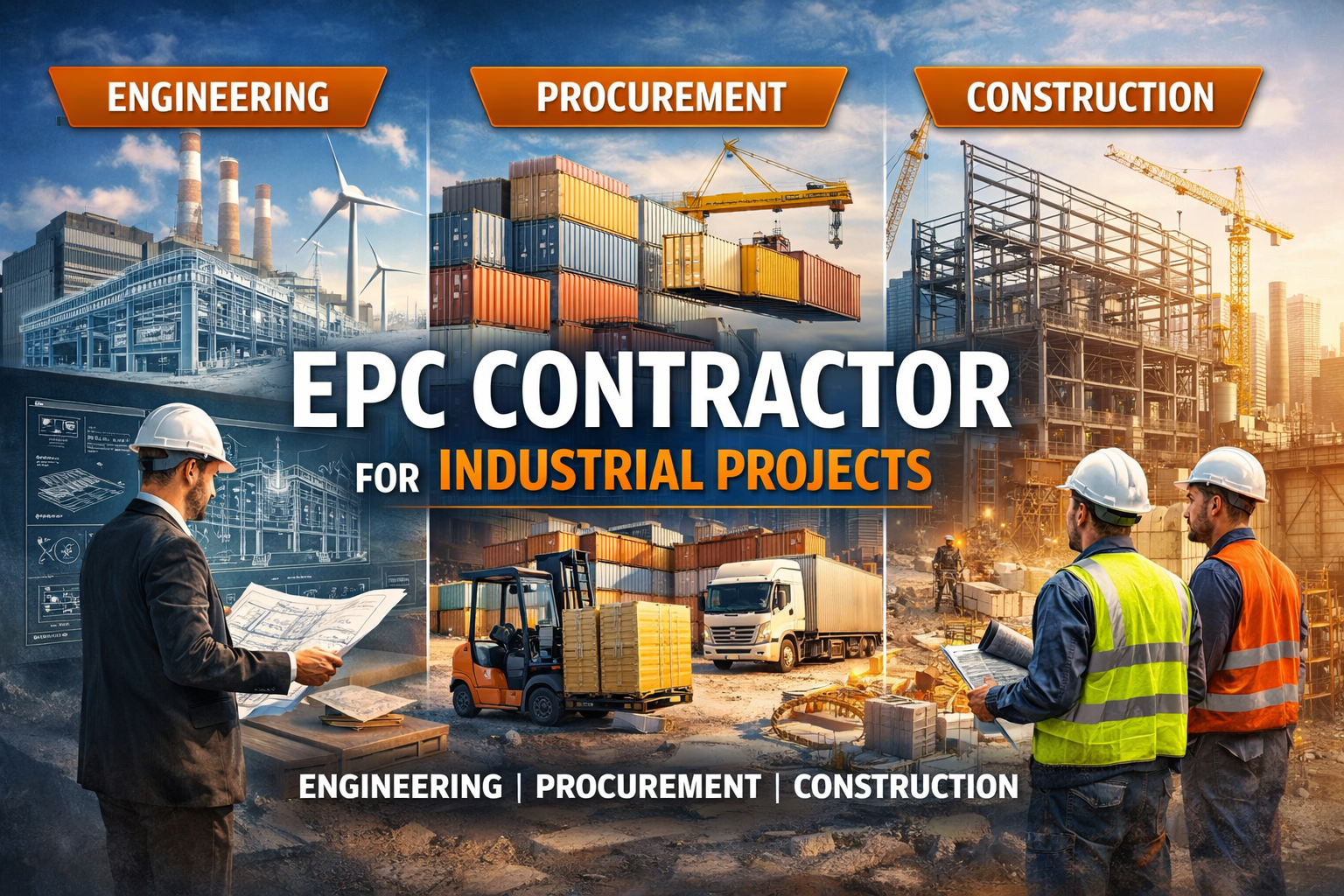
EPC stands for Engineering, Procurement, and Construction. It is a project delivery method where one contractor is responsible for handling the entire project, including planning, purchasing materials, and building the facility.
Instead of hiring multiple vendors for design, materials, and construction, companies work with a single EPC contractor who manages everything from start to finish.
This approach ensures smoother coordination, faster completion, and better cost control.
Key Responsibilities of an EPC Contractor
An EPC contractor manages the complete lifecycle of an industrial construction project.
1. Engineering and Design
The first stage involves designing the project. Engineers develop detailed drawings, structural plans, and technical specifications that ensure the building meets industry standards and operational requirements.
2. Procurement
In this stage, the contractor sources all required materials, equipment, and components. Efficient procurement ensures high-quality materials are used while maintaining project budgets.
3. Construction and Execution
Once the design and materials are ready, the contractor handles the actual construction. This includes civil works, structural installation, electrical systems, and finishing work.
Benefits of Hiring an EPC Contractor
Many industries prefer EPC contractors because they simplify project management and reduce risks.
Single Point of Responsibility
With EPC projects, one company handles everything. This eliminates confusion between multiple contractors and ensures clear accountability.
Faster Project Completion
Integrated planning and execution reduce delays and ensure the project timeline is maintained.
Cost Efficiency
EPC contractors optimize resources and procurement processes, helping companies avoid unexpected expenses.
Better Quality Control
Because one contractor manages the entire process, quality standards remain consistent throughout the project.
Industries That Use EPC Construction
EPC contractors play a crucial role in several industries that require complex infrastructure.
Manufacturing Industry
Factories require specialized civil structures, electrical systems, and machinery installation. EPC contractors ensure smooth integration of these components.
Logistics and Warehousing
Large warehouses and distribution centers demand strong structural engineering and efficient layouts for operations.
Pharmaceutical Industry
Pharma facilities must comply with strict regulatory standards, making EPC expertise essential.
IT and Commercial Infrastructure
Modern office spaces and data centers require advanced electrical systems, cooling systems, and structural planning.
Why Industrial Projects Prefer EPC Model
Industrial companies prefer EPC because it reduces project risks and simplifies management. With one contractor responsible for engineering, procurement, and construction, communication becomes easier and project delays are minimized.
This approach also improves cost predictability and ensures the project aligns with business goals.
Choosing the Right EPC Contractor
Selecting the right contractor is critical for project success.
Here are some factors businesses should consider:
- Experience in industrial construction
- Strong project management capabilities
- Proven track record with similar projects
- Ability to deliver projects on time
- Quality and safety standards
A reliable EPC contractor can transform complex construction plans into fully operational facilities.
Final Thoughts
Industrial construction projects demand precision, coordination, and expertise. The EPC model simplifies project execution by bringing engineering, procurement, and construction under one roof.
Businesses looking to build factories, warehouses, or industrial facilities can benefit greatly from working with an experienced EPC contractor who can manage every stage of the project efficiently.