
India’s industrial and infrastructure sectors are expanding at an unprecedented pace. With rapid urbanization, increasing manufacturing demand, and continuous commercial development, businesses require construction solutions that are efficient, reliable, and cost-effective. This is where EPC turnkey development has emerged as one of the most preferred project execution models across India.
EPC turnkey development provides a complete, end-to-end construction solution in which a single company manages the entire project lifecycle. From initial planning and design to procurement, construction, and final delivery, every stage is handled by one expert team. This integrated approach eliminates complexity for clients and ensures that projects are delivered on time, within budget, and according to the highest quality standards. For industrial, commercial, and infrastructure projects in India, EPC turnkey development has become a strategic choice for companies seeking seamless execution and long-term value.
Understanding EPC Turnkey Development
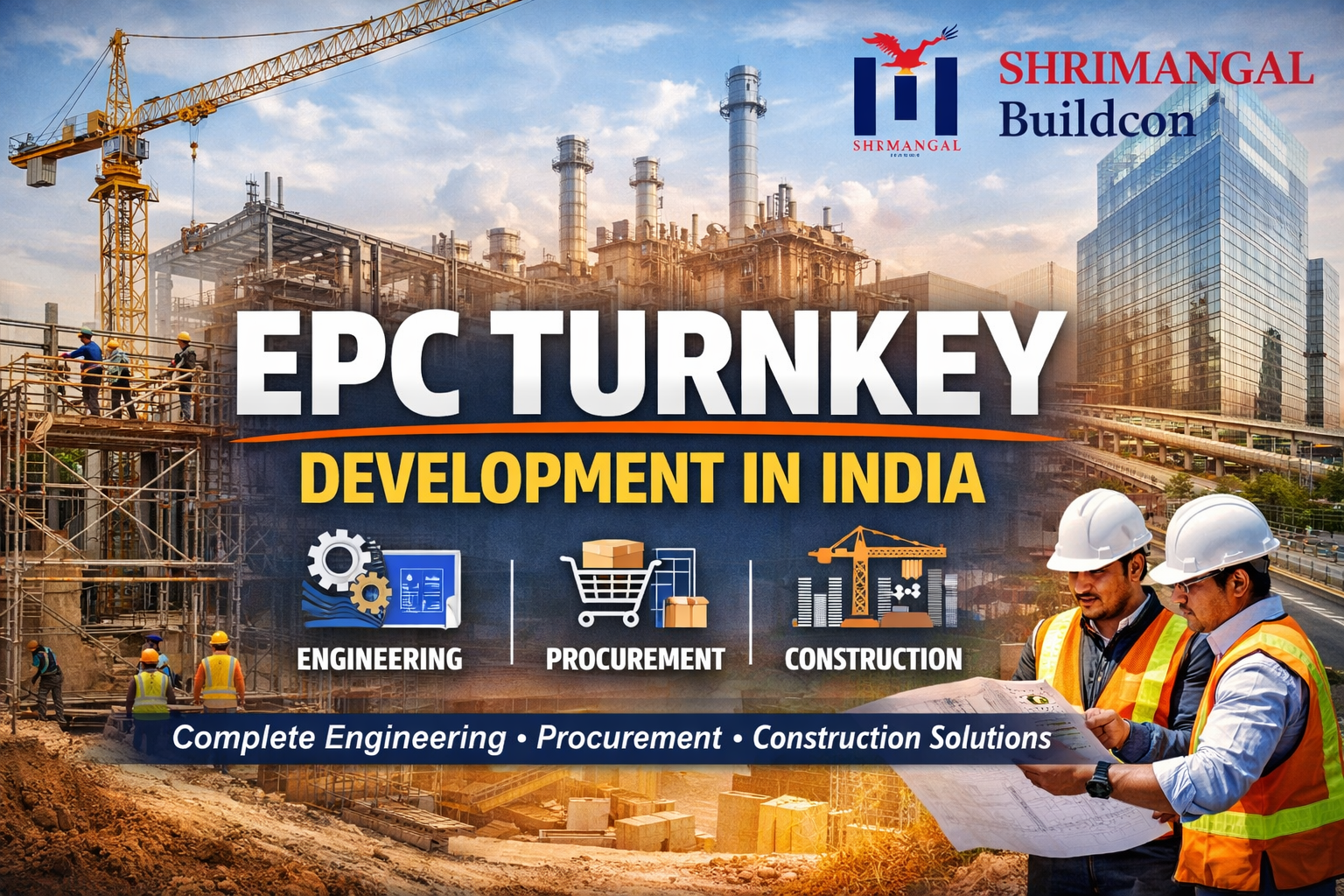
EPC stands for Engineering, Procurement, and Construction. In a turnkey development model, the contractor assumes full responsibility for delivering a ready-to-use facility. The client does not need to coordinate with multiple contractors or vendors. Instead, the EPC contractor handles all aspects of the project, ensuring smooth coordination and accountability at every stage.
The engineering phase focuses on planning and designing the structure according to project requirements, site conditions, and regulatory standards. This includes architectural design, structural engineering, electrical and mechanical planning, and feasibility studies. A strong engineering foundation ensures that the project is structurally sound, cost-efficient, and aligned with operational needs.
The procurement phase involves sourcing materials, equipment, and services required for construction. Efficient procurement plays a crucial role in maintaining quality and controlling costs. By managing vendor selection, logistics, and material supply under one system, EPC contractors ensure that construction progresses without delays.
The construction phase brings the project to life. It includes civil construction, structural erection, installations, finishing work, testing, and commissioning. Once construction is completed and quality checks are performed, the project is handed over in a fully operational condition. This comprehensive process makes EPC turnkey development one of the most reliable and efficient construction models available today.
Growing Importance of EPC Turnkey Projects in India
India’s development landscape is evolving rapidly, driven by initiatives such as Make in India, industrial corridor development, logistics expansion, and smart infrastructure projects. As industries scale and new facilities are established, businesses need construction partners who can deliver complex projects with speed and precision.
Traditional construction methods often involve multiple contractors handling different stages of a project. This fragmented approach can lead to communication gaps, delays, and cost overruns. EPC turnkey development addresses these challenges by bringing all project activities under one integrated system. With a single point of responsibility, decision-making becomes faster and execution more streamlined.
The demand for EPC turnkey development is especially high in sectors such as manufacturing, warehousing, logistics, and commercial infrastructure. Companies prefer this model because it allows them to focus on their core operations while the EPC contractor manages planning, procurement, construction, and delivery. As a result, projects are completed more efficiently and with greater consistency in quality.
Advantages of EPC Turnkey Development
One of the most significant advantages of EPC turnkey development is accountability. Since a single contractor is responsible for the entire project, there is clear ownership of timelines, budgets, and quality standards. This eliminates the confusion that often arises when multiple vendors are involved.
Another major benefit is faster project completion. Because engineering, procurement, and construction are coordinated within one system, tasks can be executed simultaneously. Procurement can begin while design work is being finalized, and construction activities can progress without waiting for separate approvals from multiple parties. This integrated workflow reduces overall project timelines and ensures timely delivery.
Cost control is also a key advantage of the EPC model. In India’s dynamic construction environment, material prices and labor costs can fluctuate significantly. EPC contractors use strategic procurement and detailed planning to maintain budget stability. By sourcing materials efficiently and minimizing wastage, they help clients achieve cost-effective project execution.
Quality and safety standards are maintained throughout the project lifecycle. Professional EPC contractors follow established engineering guidelines, safety protocols, and regulatory requirements. This ensures that the final structure is durable, compliant, and ready for long-term use. For industrial and commercial facilities, maintaining such standards is essential for operational efficiency and reliability.
Applications Across Industries
EPC turnkey development is widely used across multiple industries in India. Manufacturing companies rely on EPC contractors to build factories and production units that meet specific operational requirements. Warehousing and logistics businesses use EPC solutions to develop distribution centers, cold storage facilities, and large-scale storage units that support supply chain efficiency.
Commercial developers also benefit from EPC turnkey development when constructing office buildings, retail complexes, and mixed-use spaces. Infrastructure projects such as industrial parks, utility installations, and specialized facilities require coordinated planning and execution, making the EPC model highly suitable. The flexibility of EPC turnkey development allows it to be adapted to projects of various scales and complexities.
Choosing the Right EPC Partner
Selecting the right EPC contractor is essential for the success of any project. Experience, technical expertise, and a strong execution track record are key factors to consider. A reliable EPC partner should be capable of managing complex projects while maintaining transparency and communication with the client.
Shrimangal Buildcon has established itself as a trusted provider of EPC turnkey development solutions in India. With a commitment to quality, efficiency, and client satisfaction, the company delivers projects that meet both operational and strategic goals. Its integrated approach ensures that every stage of the project is handled with precision and professionalism, resulting in structures that stand the test of time.
The Future of EPC Turnkey Development in India
As India continues to invest in infrastructure and industrial growth, the role of EPC turnkey development will become even more significant. Advances in construction technology, sustainable materials, and project management tools are transforming the way projects are executed. EPC contractors who adopt innovative practices and maintain high standards of quality will lead the industry in the coming years.
Businesses that choose EPC turnkey development gain a competitive advantage by completing projects faster and more efficiently. With reduced risk, better cost control, and streamlined execution, this model supports long-term growth and operational success.
Conclusion
EPC turnkey development represents a modern and efficient approach to construction in India. By integrating engineering, procurement, and construction into a single cohesive process, it simplifies project management and ensures reliable results. For industrial, commercial, and infrastructure projects, this model offers the speed, quality, and cost efficiency that today’s businesses require.
Partnering with an experienced EPC contractor ensures that every stage of the project is executed with care and expertise. From initial planning to final delivery, EPC turnkey development provides a seamless path to building facilities that support growth, innovation, and long-term success.